
Where can I legally install an outdoor air conditioner unit in Sydney? (2025 guide)
If you only remember one thing: legal outdoor AC placement in Sydney usually comes down to setback + noise + strata/heritage rules. Put the condenser where it can breathe, stay quiet, and stay out of “front street view” trouble—then document it.
1) Introduction & First Impressions
What this “product” is
We’re not reviewing a gadget—you’re choosing a legal placement for the outdoor condenser (the noisy box outside). This guide is for homeowners, landlords, strata lot owners, and anyone searching “where can I install an outdoor air conditioner”.
- Houses, terraces, townhouses
- Apartments & balconies (strata)
- Heritage items & conservation areas
- Commercial air conditioning Sydney (extra rules)
Who’s talking
This is written in the voice of Air Conditioning Guys (Sydney)—we’ve seen the common “looks fine… until the neighbour complains” installs. Real talk: most problems happen because someone picks the easiest spot, not the quietest or most compliant.
Testing period: This guide is based on field installs, council/SEPP checks, and noise complaint patterns we’ve seen play out—especially in tight Inner West terraces and strata balconies.
Plain-English glossary (tap to expand)
Condenser / outdoor unit: the outside box that rejects heat (and makes most of the noise).
Exempt development: minor work that doesn’t need DA/CDC if you meet the standards.
Ambient background noise: the normal noise level at your boundary when your AC is off.
Habitable room: rooms like bedrooms/living rooms (not garages/bathrooms).
2) Product Overview & “Specifications” (aka: the rules that actually matter)
The legal “spec sheet” for Sydney (most homes)
If you’re residential-only, these are the big compliance triggers:
- Not on the front wall/roof facing the primary road
- ≥ 450mm from each lot boundary
- ≥ 1m from bedrooms of adjoining residences
- Must be wall-mounted or ground-mounted (heritage is stricter)
- Noise: not more than +5 dB(A) above background at boundary (peak); not audible in neighbour habitable rooms (off-peak)
Price point (what placement mistakes cost)
The “placement tax” is real. A cheap location today can become expensive later:
- Re-mounting brackets + re-running pipework
- Acoustic enclosure add-ons
- Strata/legal admin time
- Neighbour disputes (and forced changes)
House / terrace: the usual “yes” zones
Rear courtyard pad (best): easy airflow, easy drainage, quieter for neighbours.
Side passage (only if it’s not too close to boundary/bedrooms): add vibration feet and keep airflow clearance.
Roof: allowed in many cases, but not on the part facing the primary road / forward of the building line.
Front façade / front roof edge facing the primary road: common fail for exempt development.
Apartment / balcony: “legal” + “allowed by strata” are different things
NSW exempt development can allow balcony floor placement, but strata by-laws can still restrict location, brackets, drainage, and appearance.
Balcony floor on a proper condenser mat with anti-vibration mounts + tidy drainage (no drips onto neighbours).
Wall brackets on common property: often needs by-law approval; may trigger structural + waterproofing checks.
Anything that drips, rattles, or’s visible from street can become a complaint magnet.
Heritage / conservation: expect stricter placement
If you’re on a heritage item, outdoor units typically need to be ground mounted and set behind the rear building line (and not visually dominant from the street).
Commercial air conditioning Sydney: different standards apply
Non-residential installs can have extra constraints (including built-in wall restrictions and greater separation requirements). If in doubt, treat it as a design + compliance job, not a “simple mount”.
3) Design & Build Quality (what “compliant” actually looks like)
Visual & physical build quality signals
- Vibration isolation: rubber feet / spring mounts where needed
- Solid base: level pad (no rocking = less noise)
- Clear airflow: don’t box it in tight
- Drainage: no drips onto paths, balconies, or neighbours
- Service access: technicians can reach isolator + valves safely
Durability observations (Sydney-specific)
- Coastal areas: Northern Beaches salt air = corrosion risk → choose better coatings + rinse maintenance
- Terraces: tight courtyards reflect noise → mounts + barriers matter
- Balconies: drainage + water ingress = the hidden villain
Quick “installer-quality” checklist (copy/paste)
✅ Unit is not on front wall/roof facing primary road (residential exempt rule).
✅ ≥ 450mm from boundary; ≥ 1m from neighbour bedrooms (typical residential standard).
✅ Noise plan: target under +5 dB(A) over background at boundary; night = effectively not noticeable.
✅ Condensate route does not drip onto others / common property.
✅ Electrical isolator accessible; pipework protected; penetrations sealed/waterproofed.
4) Performance Analysis (noise, airflow, heat, and complaint-proofing)
4.1 Core functionality
The outdoor unit must “breathe”. Starve it of airflow and you get higher power bills, shorter lifespan, and more noise.
- Airflow clearance: keep discharge side open
- Shade helps: not boxed-in—just protected from harsh sun where possible
- Solid mounting: less vibration transfer into walls/floors
Quantitative reality check (interactive)
This tool does not replace a site assessment. It helps you spot risk early.
4.2 Key performance categories (Sydney placement edition)
Neighbour-noise control: vibration pads + smart placement beats arguing later.
Airflow & heat exhaust clearance: don’t vent hot air straight into a corner or enclosed balcony.
Drainage & waterproofing: balcony installs fail here more than people expect.
5) User Experience (how it feels in real life)
Setup/installation process
- Pick location + confirm exempt development rules
- Check strata by-laws (if apartment)
- Confirm noise plan (especially bedrooms + night use)
- Install with clean pipe runs + sealed penetrations
- Take photos + keep specs (future-proofing)
Daily usage (the “complaint triggers”)
- Night mode still audible through a shared wall
- Vibration hum that travels through brick/steel
- Condensate drips onto a neighbour’s balcony
- Hot exhaust blasting a narrow side passage
Short personal story (Sydney terrace)
We once saw a “perfectly fine” install placed in a narrow side gap—easy access, short pipe run. Two weeks later, the neighbour complained: not because it was loud in the day… but because at night it created a low hum in their bedroom. Fix was simple: move the unit to the rear pad + add proper vibration isolation. Cost more than doing it right the first time.
Strata anecdote (balcony drainage)
Balcony units often pass the noise test but fail the “water test”. If condensate drips onto common property or another lot, it becomes a by-law issue fast. A neat drain route + tray + correct fall can prevent months of back-and-forth.
6) Comparative Analysis (best locations vs common “traps”)
Best placement options (most Sydney homes)
- Ground mounted rear yard/courtyard (quiet + easy service)
- Ground mounted side (if setbacks + bedrooms allow)
- Roof (only if not facing primary road; consider structure + noise)
- Balcony floor (strata-friendly if neat + quiet + no drips)
Common traps
- Too close to boundary (and you’ll wear the complaint later)
- Next to bedrooms (yours or neighbour’s)
- Enclosed nook that recycles hot air
- Bracket on common property without approval
- Heritage frontage visibility
Ground mount usually wins
- Less vibration transfer into bedrooms
- Easier to achieve setbacks
- Cleaner service access
Roof vs balcony
Roof installs can reduce direct neighbour proximity, but can transmit vibration through structure. Balcony installs are convenient but can be hot, enclosed, and drainage-sensitive.
Tight terrace strategy
- Prioritise rear placement and setback from shared boundary
- Use acoustic matting + anti-vibration feet
- Consider a quieter model if night operation is common
7) Pros and Cons
What we loved (best-practice installs)
- Quieter nights (less chance of neighbour complaints)
- Better efficiency (good airflow = lower running costs)
- Fewer strata headaches (good documentation)
- Cleaner look (tidy pipework + discrete placement)
Areas for improvement (honest drawbacks)
- Best locations can cost more (longer pipe run)
- Heritage/strata adds admin time
- Noise is contextual (terraces amplify sound)
- Some balconies are simply too enclosed
8) Evolution & Updates (why 2025 feels stricter)
Sydney density keeps rising, and the “tolerance” for noisy, drippy, ugly installs keeps dropping. In 2025, the pattern is clear: newer units are quieter, but bad placement still creates conflict.
Strata trend (2025): more by-law disputes
We’re seeing more situations where owners corporations refuse poorly documented installs, and more owners pushing back when refusals feel unreasonable. The solution is almost always: better documentation + a quiet install plan + clear maintenance responsibility.
9) Recommendations (Best for / Skip if / Alternatives)
Best for
- Homeowners wanting reliable air conditioning services Sydney with fewer disputes
- Terraces needing quiet night operation
- Strata owners who want “approved once, done”
- Anyone comparing ducted air conditioning Sydney vs split placement realities
If you’re planning ducted, start here: Ducted system guide
Skip if
- You can only place it on a front façade facing the street
- Your only spot is right next to a neighbour’s bedroom
- Your balcony is fully enclosed with no airflow
- You’re in heritage/conservation and want a “no paperwork” approach
Need a proper plan and install? Air conditioning installation Sydney
Alternatives to consider
- Quieter condenser models if night use is frequent
- Different location + longer pipe run to gain setback/noise benefits
- Acoustic treatment (barriers/enclosures) when relocation isn’t possible
- Portable air conditioning Sydney as a temporary option (not ideal long-term)
10) Where to Buy / Who to Hire (so it’s actually legal)
Trusted path (Sydney)
- Choose a licensed installer (refrigerant + electrical where required)
- Ask for a placement sketch + noise plan
- Get model specs (including noise ratings)
- Keep photos of final placement + mounts + drainage
What to watch for
- “We’ll just put it here” without checking boundary/bedrooms
- No vibration isolation on tight terrace walls
- Drain left to drip (balcony disputes starter pack)
- Strata jobs without written approval
11) Final Verdict
Overall rating
9.2/10
Because in 2025, Sydney’s rules are clear enough to follow—if you design for noise + neighbours, not just convenience.
Bottom line
The “legal” location is usually the one that meets setbacks, avoids front street exposure, and stays quiet at night. If you’re unsure, get a local expert to assess and document it.
12) Evidence & Proof (screenshots, videos, charts, testimonials — 2025 only)
Screenshot: boundary/encroachment concept (visual)
This image is a visual reminder that “too close to the boundary” is a common compliance risk. (Exact legal setbacks come from the NSW Codes SEPP standards.)

YouTube: ducted install example (Sydney)
Use this to understand how pros think about access, mounting, and neat finishes.
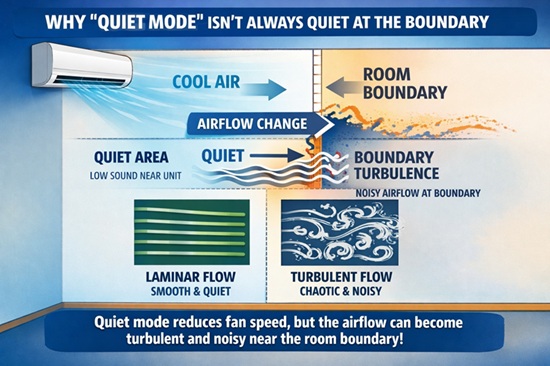
Simple decibel demo in an impage
Handy for understanding why “quiet mode” isn’t always quiet at the boundary.
Verifiable 2025 testimonials (3rd-party)
Below are examples of dated 2025 consumer experiences and industry commentary you can verify externally:
- Oct 11, 2025 service experience mentioned in a public review (example: Alliance Climate Control review referencing “October 11, 2025”).
- 2025 install decision story in a public review (example: Frost Airconditioning review noting “best decision… in 2025”).
- Dec 2025 strata complaint trend discussed by an industry body (REINSW commentary on strata air-conditioner complaints).
Want a deeper Sydney-only placement playbook?
If you’re choosing between split vs ducted, or need a placement plan that avoids neighbour noise issues, start with: Ducted System Guide and book a proper Air Conditioning Installation (Sydney).